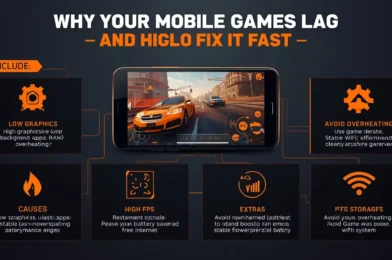
Why Your Mobile Games Lag and How to Fix It Fast

Mobile game lag can completely ruin your gaming experience. Whether you are facing stuttering, delayed controls, or sudden FPS drops, lag makes it harder to play and compete.

The good news is that most lag issues can be fixed quickly with the right settings and simple optimizations. In this guide, you will learn why your mobile games lag and how to fix it fast.


What Causes Lag in Mobile Games?

Lag is usually caused by your device struggling to handle the game or by network issues. The most common reasons include:

  • High graphics settings
  • Low RAM or weak processor
  • Background apps using resources
  • Overheating
  • Low storage space
  • Poor internet connection

Understanding the cause helps you apply the right fix.


1. Lower Graphics Settings Immediately

The fastest way to reduce lag is to lower graphics.

Recommended Settings:

  • Graphics: Low or Smooth
  • Frame Rate: High (if stable)
  • Shadows: Off
  • Anti-Aliasing: Off
  • Effects: Low

This reduces the workload on your device and improves stability.


2. Close Background Apps

Apps running in the background consume RAM and CPU.

Before playing:

  • Close all unnecessary apps
  • Clear recent apps

This allows your game to use maximum system resources.


3. Turn Off Battery Saver

Battery Saver can limit performance. According to Android Help, this mode reduces system activity and may affect app performance, including games.

Disabling it ensures your phone runs at full power.


4. Restart Your Device

Restarting your phone:

  • Clears temporary memory
  • Stops hidden processes
  • Improves responsiveness

It is one of the quickest fixes for lag.


5. Free Up Storage Space

Low storage can slow down your device and cause stuttering.

What to do:

  • Delete unused apps
  • Clear cache
  • Remove large files

Keeping enough free space improves performance.


6. Prevent Overheating

Heat is a major cause of lag.

To avoid overheating:

  • Do not play while charging
  • Play in a cool environment
  • Take short breaks

When your phone overheats, it automatically reduces performance.


7. Use Game Booster or Game Mode

Many Android phones include gaming tools.

For example, Samsung Game Booster helps optimize performance and manage background activity during gameplay.


8. Check Your Internet Connection

For online games, network lag is also important.

  • Use Wi-Fi instead of mobile data
  • Stay close to the router
  • Avoid crowded networks

A stable connection reduces delay and improves responsiveness.


9. Reduce Screen Brightness

High brightness increases heat and battery usage. Lowering it slightly can help maintain stable performance.


10. Update Your System and Games

Updates often include performance improvements and bug fixes. Always keep your system and games updated.


Common Mistakes to Avoid

  • Using high graphics on weak devices
  • Playing while charging
  • Keeping many apps open
  • Ignoring overheating
  • Not optimizing system settings

Extra Tip

If you experience technical issues or performance problems, you can visit official support pages like PUBG MOBILE Support for troubleshooting and updates.


Conclusion

Mobile game lag is usually caused by high system load or poor optimization—but the fix is simple.

By lowering graphics, closing background apps, preventing overheating, and improving your connection, you can quickly reduce lag and enjoy smoother gameplay.
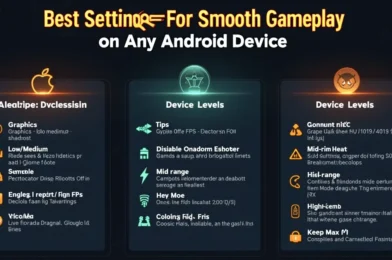
Best Settings for Smooth Gameplay on Any Android Device

If your games lag, stutter, or overheat your phone, the problem is often not the game itself—it is your settings. Whether you play PUBG Mobile, Free Fire, COD Mobile, or any other game, optimizing your Android device can dramatically improve performance.

In this guide, you will learn the best settings for smooth gameplay on any Android device, from low-end to high-end.


Why Mobile Games Lag on Android

Many Android devices struggle with gaming due to:

  • Limited RAM and processing power
  • Background apps consuming resources
  • High graphics settings
  • Overheating during long sessions
  • Poor system optimization

To fix this, you need to reduce system load and focus on stable performance.


Best In-Game Settings for Smooth Gameplay

These settings apply to most mobile games.


Graphics Quality: Low or Medium

Set graphics to Low or Medium.

Lower graphics reduce GPU load and help maintain stable FPS.


Frame Rate: High (If Stable)

Set frame rate to High or the highest stable option.

Higher FPS improves smoothness, but if your phone overheats, reduce it slightly.


Shadows: Off

Disable shadows to reduce unnecessary GPU usage.


Anti-Aliasing: Off

Turn off anti-aliasing to improve performance on weaker devices.


Effects and Filters: Low

Reduce visual effects such as bloom, reflections, and motion blur.


Best Android System Settings for Gaming

Close Background Apps

Before playing, close all unnecessary apps to free RAM and CPU resources.


Turn Off Battery Saver

Battery Saver can reduce performance. According to Android Help, this mode limits system activity and may affect app performance, including games.


Enable Game Mode (If Available)

Many phones include built-in gaming tools. For example, Samsung Game Booster allows performance optimization and background control during gameplay.


Restart Your Device

Restarting your phone clears temporary memory usage and improves responsiveness.


Keep Storage Space Available

Low storage can slow down your phone. Always keep enough free space for better performance.


Reduce Lag and Improve Stability

Avoid Overheating

  • Do not play while charging
  • Play in a cool environment
  • Take breaks between sessions

Heat is one of the main causes of performance drops.


Lower Screen Brightness

High brightness increases heat and battery usage. Keep it at a moderate level.


Keep System Updated

Update your Android system and games regularly to benefit from performance improvements and bug fixes.


Best Settings by Device Type

Low-End Devices (2GB–3GB RAM)

  • Graphics: Low
  • Frame Rate: Medium
  • Shadows: Off
  • Effects: Off

Mid-Range Devices (4GB–6GB RAM)

  • Graphics: Medium
  • Frame Rate: High
  • Shadows: Off

High-End Devices (6GB+ RAM)

  • Graphics: High
  • Frame Rate: Max
  • Effects: Medium or High

Common Mistakes to Avoid

  • Using maximum graphics on weak devices
  • Playing while charging
  • Keeping many apps open in the background
  • Ignoring overheating issues
  • Changing settings too often

Conclusion

The best settings for smooth gameplay on any Android device focus on one principle: performance over visuals.

By lowering graphics, disabling heavy effects, and optimizing your device, you can achieve a smoother and more responsive gaming experience—no matter what phone you use.

Consistency, stability, and proper optimization will always outperform high graphics in competitive gaming.

Best Graphics Settings for Mobile Games on Low-End Phones

Playing mobile games on a low-end phone can be frustrating when you experience lag, frame drops, and overheating. However, with the right graphics settings and a few optimizations, you can significantly improve performance and enjoy smoother gameplay—even on budget devices.

In this guide, you will learn the best graphics settings for mobile games on low-end phones, along with practical tips to boost performance and reduce lag.

Why Low-End Phones Struggle With Games

Low-end devices usually have:

  • Limited RAM
  • Entry-level processors
  • Weak GPUs
  • Basic cooling systems

When games run on high graphics settings, these components get overloaded, leading to:

  • FPS drops
  • Stuttering
  • Overheating
  • Battery drain

The solution is to reduce visual load and focus on stable performance.

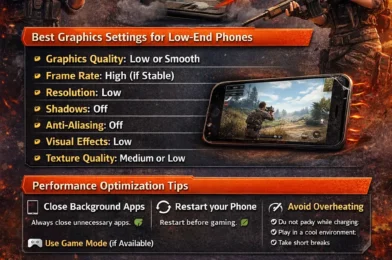
Best Graphics Settings for Low-End Phones

These settings apply to most mobile games like PUBG Mobile, Free Fire, COD Mobile, and others.

Graphics Quality: Low or Smooth

Always set Graphics Quality to Low or Smooth.

This reduces texture detail and rendering load, which helps maintain stable FPS.

Frame Rate: High (If Stable)

Set Frame Rate to High or the highest stable option.

Higher FPS improves smoothness and responsiveness, but if your phone overheats, reduce it slightly.

Resolution: Low

Lower resolution reduces the number of pixels your phone needs to render, which improves performance.

Shadows: Off

Turn Shadows Off.

Shadows consume GPU resources and often cause frame drops during gameplay.

Anti-Aliasing: Off

Disable Anti-Aliasing.

While it improves visuals, it significantly impacts performance on weaker devices.

Visual Effects: Low

Set effects like reflections, bloom, and motion blur to Low or Off.

Texture Quality: Medium or Low

Lower texture quality reduces memory usage and helps avoid stuttering.

Best Performance Optimization Tips

Graphics settings alone are not enough. You also need to optimize your phone.

Close Background Apps

Always close unnecessary apps before gaming. This frees RAM and CPU power.

Turn Off Battery Saver

Battery Saver can limit performance. According to Android Help, this mode reduces system activity and can affect app performance, including games.

Restart Your Phone Before Gaming

Restarting clears temporary memory and improves system responsiveness.

Keep Enough Free Storage

Low storage slows down your device. Always keep free space available for better performance.

Use Built-in Game Mode

Many Android devices include gaming tools. For example, Samsung Game Booster allows performance tuning and background optimization during gameplay.

Avoid Overheating

  • Do not play while charging
  • Play in a cool environment
  • Take short breaks

Heat is one of the main causes of lag.

Update Your System and Games

Keep your Android system and games updated to ensure better optimization and bug fixes.

Recommended Settings by Device Level

2GB–3GB RAM Phones

  • Graphics: Low
  • Frame Rate: Medium
  • Shadows: Off
  • Effects: Off

4GB RAM Phones

  • Graphics: Low or Medium
  • Frame Rate: High
  • Shadows: Off

6GB+ RAM Phones

  • Graphics: Medium or High
  • Frame Rate: High or Max
  • Shadows: Optional

Common Mistakes to Avoid

  • Using high graphics on weak devices
  • Playing while charging
  • Keeping many apps open in the background
  • Ignoring overheating issues
  • Using max settings just for visuals

Conclusion

The best graphics settings for mobile games on low-end phones focus on one goal: smooth and stable performance.

By lowering graphics, disabling heavy effects, and optimizing your device, you can enjoy a much better gaming experience without lag—even on older Android phones.

Remember, performance always matters more than visuals when it comes to competitive gameplay.

Best Shooting Games for 2GB RAM Android Phones

Finding good shooting games that run smoothly on a 2GB RAM phone can be difficult. Most modern FPS games require high performance, which leads to lag, frame drops, and overheating on low-end devices.

The good news is that there are still many lightweight shooting games that work perfectly on 2GB RAM phones. In this guide, you will discover the best shooting games for smooth and lag-free gameplay.


Why Shooting Games Lag on 2GB RAM Phones

Shooting games are usually demanding because they include real-time combat, detailed maps, and heavy effects.

Low-end devices struggle due to:

  • Limited RAM and weak processors
  • High graphics and effects
  • Background apps consuming resources
  • Overheating during gameplay

That is why choosing optimized and lightweight shooting games is essential.


Best Shooting Games for 2GB RAM Android Phones


1. Free Fire

One of the most popular battle royale games optimized for low-end devices.

  • Smooth performance on 2GB RAM
  • Small match size
  • Fast-paced gameplay

If you face issues, you can visit Garena Free Fire Support for updates and troubleshooting.


2. PUBG Mobile Lite (If Available)

A lighter version of PUBG Mobile designed for low-end phones.

  • Smaller maps
  • Fewer players
  • Better performance

You can check updates on PUBG MOBILE Support.


3. Cover Fire

A great offline shooting game with good optimization.

  • Story mode available offline
  • Smooth controls
  • Works well on weak devices

4. Modern Sniper

A lightweight sniper game that runs smoothly.

  • Simple gameplay
  • Low storage size
  • Good performance on 2GB RAM

5. Major Mayhem 2

A fun arcade-style shooting game with low requirements.

  • Cartoon-style graphics
  • Smooth gameplay
  • Very lightweight

6. Into the Dead 2

A survival shooter with simple mechanics and good optimization.

  • Offline gameplay
  • Smooth performance
  • Works on low-end devices

Best Settings for Smooth Gameplay

Even optimized games need proper settings.

Recommended Settings:

  • Graphics: Low or Smooth
  • Frame Rate: Medium
  • Shadows: Off
  • Effects: Low

These settings help maintain stable FPS.


Best Tips to Reduce Lag

1. Close Background Apps

Free RAM before playing.


2. Turn Off Battery Saver

Battery Saver can limit performance. According to Android Help, it reduces system activity and may affect app performance.


3. Avoid Overheating

  • Do not play while charging
  • Take breaks
  • Keep your phone cool

4. Keep Storage Free

Low storage slows down your phone and causes lag.


Common Mistakes to Avoid

  • Installing heavy shooting games
  • Using high graphics settings
  • Playing while charging
  • Keeping many apps open

Extra Tip

If a game feels unstable, lower the frame rate instead of increasing it. Stability is more important than higher FPS on 2GB RAM devices.


Conclusion

You can still enjoy shooting games on a 2GB RAM Android phone if you choose the right titles and optimize your settings.

Focus on lightweight games, reduce graphics, and keep your device optimized for smooth and lag-free gameplay.

COD Mobile Best Sensitivity Settings for Multiplayer

If you want to improve your aim, reaction time, and overall performance in COD Mobile multiplayer, your sensitivity settings are one of the most important factors. The right setup can help you control recoil, track enemies smoothly, and win more gunfights.

In this guide, you will find the best COD Mobile sensitivity settings for multiplayer, along with tips to adjust them based on your playstyle and device.


Why Sensitivity Settings Matter in Multiplayer

Multiplayer matches are fast-paced and require quick reactions. If your sensitivity is not optimized, you may struggle with:

  • Over-aiming or under-aiming
  • Poor recoil control
  • Slow target tracking
  • Inconsistent accuracy

The goal is to balance speed and control for smoother gameplay.


Best Camera Sensitivity Settings

Camera sensitivity controls how fast your view moves when you are not shooting.

  • Standard Sensitivity: 90–100
  • ADS (Tap & Hold): 80–95
  • Tactical Scope: 70–85
  • Sniper Scope: 50–65

These values allow fast scanning while maintaining control during movement.


Best Firing Sensitivity (ADS Sensitivity)

Firing sensitivity is the most important setting for recoil control.

  • Standard Sensitivity: 85–100
  • ADS Sensitivity: 75–90
  • Tactical Scope: 60–80
  • Sniper Scope: 40–60

Lower sensitivity on higher zoom scopes helps improve accuracy and reduces recoil shake.


Best Gyroscope Sensitivity (Optional)

If you use gyroscope, you can achieve better recoil control and precision.

  • Standard: 250–350
  • ADS: 200–300
  • Tactical Scope: 150–250
  • Sniper Scope: 80–150

Gyroscope allows finer control compared to touch-only aiming.


How to Adjust Sensitivity for Better Performance

Start With Recommended Values

Use the settings above as a base, then adjust gradually based on your comfort.


Test in Multiplayer Matches

Practice in real matches instead of copying settings blindly.


Keep Your FPS Stable

Sensitivity feels completely different on unstable FPS. Make sure your game runs smoothly. You can follow general performance tips from Android Help, which explains how system settings can affect app performance.


Adjust Based on Your Playstyle

  • Aggressive players: Slightly higher sensitivity for faster reactions
  • Defensive players: Lower sensitivity for better accuracy

Best Tips for Better Aim in COD Mobile

Control Recoil Properly

Drag your aim slightly downward while shooting to control recoil.


Use the Right Weapons

Some weapons are easier to control in multiplayer, especially for beginners.


Practice Consistently

Stick with one sensitivity setup for several days to build muscle memory.


Avoid Frequent Changes

Changing settings too often will slow your improvement.


Device Optimization Tips

Close Background Apps

Free up RAM before playing.


Avoid Overheating

  • Do not play while charging
  • Take breaks between matches

Use Game Booster

If available, enable gaming tools like Samsung Game Booster to improve performance.


Extra Tip

If you face issues such as bugs, login errors, or gameplay problems, you can check the official COD Mobile Support page for help.


Common Mistakes to Avoid

  • Using extremely high sensitivity (leads to shaky aim)
  • Using very low sensitivity (slow reactions)
  • Ignoring ADS sensitivity
  • Playing with unstable FPS
  • Copying pro settings without testing

Conclusion

The best COD Mobile sensitivity settings for multiplayer focus on achieving the perfect balance between speed and control.

Start with the recommended values, adjust gradually, and practice consistently. With the right setup and stable performance, your aim and reaction time will improve significantly in multiplayer matches.

Best Survival Games for Low-End Android Devices

Survival games are some of the most exciting mobile games, but many of them require powerful devices. If you are using a low-end Android phone, you may experience lag, crashes, or overheating when playing heavy survival games.

The good news is that there are several lightweight survival games that run smoothly even on weak devices. In this guide, you will discover the best survival games for low-end Android devices that offer a smooth and enjoyable experience.


Why Survival Games Lag on Low-End Phones

Survival games are usually demanding because they include large maps, crafting systems, and real-time interactions.

Low-end devices struggle due to:

  • Limited RAM and weak processors
  • Heavy graphics and detailed environments
  • Background apps consuming resources
  • Overheating during long gameplay

That is why choosing optimized and lightweight survival games is important.


Best Survival Games for Low-End Android Devices


1. Last Day on Earth: Survival (Lite Play Style)

A popular survival game that can run on low-end devices with low settings.

  • Crafting and base building
  • Zombie survival gameplay
  • Works better on low graphics

2. Survival Island: EVO

A lightweight survival game designed for weaker phones.

  • Offline gameplay
  • Simple crafting system
  • Smooth performance

3. Ocean Is Home: Survival Island

A realistic survival simulator with low system requirements.

  • Building and crafting
  • Open-world exploration
  • Runs well on 2GB RAM

4. Radiation Island (Optimized Settings)

A survival adventure game that can run smoothly if settings are reduced.

  • Story-driven gameplay
  • Open-world survival
  • Better performance on low graphics

5. Mini DAYZ

A pixel-style survival game that is extremely lightweight.

  • Offline gameplay
  • Very low storage usage
  • Smooth on almost any device

6. Grim Soul: Dark Survival (Low Settings)

A dark survival RPG that can run on low-end phones with proper settings.

  • Crafting and exploration
  • Survival mechanics
  • Playable on Smooth graphics

Best Settings for Smooth Gameplay

Even lightweight survival games need proper optimization.

Recommended Settings:

  • Graphics: Low or Smooth
  • Frame Rate: Medium
  • Shadows: Off
  • Effects: Low

These settings help reduce lag and improve stability.


Best Tips for Better Performance

1. Close Background Apps

Free RAM before launching the game.


2. Turn Off Battery Saver

Battery Saver can reduce performance. According to Android Help, it limits system activity and may affect app performance.


3. Avoid Overheating

  • Do not play while charging
  • Take breaks
  • Keep your phone cool

4. Keep Storage Space Free

Low storage can slow down your device and cause lag.


Common Mistakes to Avoid

  • Installing heavy survival games not optimized for low-end devices
  • Using high graphics settings
  • Playing for long periods without breaks
  • Keeping many apps running in background

Extra Tip

If a survival game feels laggy, reduce frame rate instead of increasing it. Stable performance is more important than higher FPS on weak devices.


Conclusion

Survival games can still be enjoyable on low-end Android devices if you choose the right titles and optimize your settings.

Focus on lightweight games, use low graphics, and keep your phone optimized to enjoy smooth and lag-free gameplay.

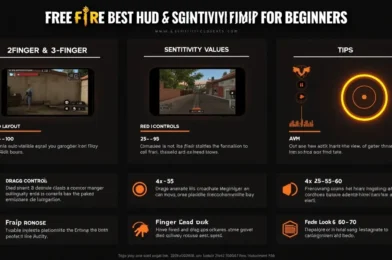
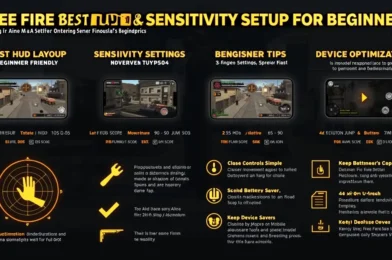
Free Fire Best HUD and Sensitivity Setup for Beginners

If you are new to Free Fire, having the right HUD (controls layout) and sensitivity settings can make a huge difference in your performance. Many beginners struggle not because of skill, but because their controls are not optimized.

In this guide, you will learn the best HUD and sensitivity setup for beginners in Free Fire, helping you aim better, react faster, and win more fights.


Why HUD and Sensitivity Matter

Your HUD controls how you interact with the game, while sensitivity controls how your aim moves.

A good setup helps you:

  • React faster in fights
  • Aim more accurately
  • Control recoil better
  • Avoid misclicks during intense moments

Without proper settings, even simple fights become difficult.


Best HUD Layout for Beginners

Use a 2-Finger or 3-Finger Setup

For beginners, start with:

  • 2-finger setup (simple and easy to learn)
  • Move to 3-finger setup once you improve

Recommended HUD Layout

  • Left side: Movement joystick
  • Right side: Fire button (larger size for easy tapping)
  • Top right: Scope button
  • Bottom center: Jump and crouch
  • Keep buttons spaced to avoid accidental touches

Adjust Button Size and Transparency

  • Fire button: 60–80% size
  • Movement joystick: 70–90%
  • Set transparency around 20–40% so buttons are visible but not distracting

Best Sensitivity Settings for Beginners

Here is a balanced setup to help you aim better:

  • General: 90–100
  • Red Dot: 85–95
  • 2x Scope: 75–85
  • 4x Scope: 65–75
  • AWM Scope: 50–60
  • Free Look: 60–70

These values provide a good mix of speed and control, ideal for beginners.


How to Combine HUD + Sensitivity for Better Gameplay

Keep Controls Simple

Do not overcrowd your screen. Simplicity improves reaction time.


Train Muscle Memory

Stick to the same layout and sensitivity for several days. Consistency is key.


Practice Drag Shooting

Drag your aim slightly upward while shooting to improve headshot accuracy.


Focus on Crosshair Placement

Keep your crosshair at head level while moving around the map.


Device Optimization Tips for Beginners

Close Background Apps

Free RAM by closing unnecessary apps before playing.


Turn Off Battery Saver

Battery Saver can reduce performance. According to Android Help, it may limit system activity and affect app performance.


Keep Your Device Cool

Avoid overheating by not playing while charging and taking breaks.


Use Game Mode

If your phone supports gaming tools, use them. For example, Samsung Game Booster offers performance optimization during gameplay.


Common Mistakes Beginners Make

  • Using very high sensitivity (causes shaky aim)
  • Copying pro HUD without practice
  • Changing settings too often
  • Using cluttered control layouts
  • Ignoring device performance

Extra Tip

If you experience account issues, bugs, or technical problems, you can visit the official Garena Free Fire Support for help and updates.


Conclusion

The best HUD and sensitivity setup for Free Fire beginners focuses on simplicity, control, and consistency.

Start with a clean layout, use balanced sensitivity, and practice regularly. Over time, your aim, reaction speed, and overall gameplay will improve significantly.

How to Fix Overheating While Gaming on Android

Overheating is one of the biggest problems mobile gamers face. When your phone gets too hot, performance drops, FPS becomes unstable, and your gaming experience gets worse.

The good news is that overheating can be fixed easily with the right settings and habits. In this guide, you will learn how to fix overheating while gaming on Android and keep your device cool and stable.


Why Your Phone Overheats While Gaming

Smartphones generate heat when running heavy tasks like gaming. On low-end or even mid-range devices, this heat builds up quickly.

Common causes include:

  • High graphics settings
  • Playing while charging
  • Poor ventilation
  • Background apps running
  • High screen brightness
  • Long gaming sessions

When your phone overheats, it automatically reduces performance (thermal throttling), which causes lag.


1. Lower In-Game Graphics Settings

The easiest way to reduce heat is to lower graphics.

Recommended Settings:

  • Graphics: Low or Smooth
  • Frame Rate: Medium or High (stable only)
  • Shadows: Off
  • Effects: Low

Lower settings reduce CPU and GPU usage, which directly reduces heat.


2. Never Play While Charging

Playing while charging is one of the main causes of overheating.

  • Charging generates heat
  • Gaming generates heat
    👉 Combined = extreme temperature

Avoid this completely if you want stable performance.


3. Close Background Apps

Apps running in the background consume CPU and RAM.

Before gaming:

  • Close all apps
  • Clear recent apps

This reduces workload and heat.


4. Turn Off Battery Saver

Battery Saver can affect performance and efficiency. According to Android Help, it limits system activity, which may impact app performance.

Turning it off helps your device run more efficiently during gaming.


5. Reduce Screen Brightness

High brightness increases heat and battery usage.

  • Keep brightness at 40–60%
  • Avoid max brightness unless necessary

This helps keep your phone cooler during long sessions.


6. Take Breaks Between Matches

Continuous gaming causes heat buildup.

👉 Best practice:

  • Play 2–3 matches
  • Take a short break

This allows your phone to cool down naturally.


7. Remove Phone Case While Gaming

Phone cases trap heat inside the device.

  • Remove thick cases during gaming
  • Allow better airflow

This can noticeably reduce temperature.


8. Play in a Cool Environment

Your surroundings matter.

Avoid:

  • Hot rooms
  • Direct sunlight

Play in:

  • Cool indoor environments
  • Well-ventilated areas

9. Use Game Mode or Game Booster

Some phones have built-in gaming tools.

For example, Samsung Game Booster helps manage performance and optimize system behavior during gameplay.


10. Keep Your Phone Updated

System updates often improve:

  • Thermal management
  • Performance efficiency
  • Bug fixes

Always keep your Android system updated.


Common Mistakes to Avoid

  • Playing while charging
  • Using max graphics on weak devices
  • Gaming for long periods without breaks
  • Keeping apps running in background
  • Using thick phone cases

Extra Tip

If your phone overheats even with low settings, try reducing frame rate instead of graphics. A stable frame rate generates less heat than pushing maximum FPS.


Conclusion

Overheating while gaming on Android is common, but easy to fix.

By lowering graphics, avoiding charging while playing, closing background apps, and keeping your device cool, you can significantly reduce heat and enjoy smoother gameplay.

Remember: a cooler phone = better performance + longer gaming sessions.

How to Boost Gaming Performance on Low-End Android Devices

Gaming on a low-end Android device can be frustrating when you experience lag, frame drops, and slow response times. However, with the right optimizations, you can significantly boost performance and enjoy smoother gameplay—even on budget phones.

In this guide, you will learn how to boost gaming performance on low-end Android devices using simple and effective methods.


Why Low-End Devices Struggle With Games

Low-end phones often have:

  • Limited RAM
  • Entry-level processors
  • Weak GPUs
  • Basic cooling systems

These limitations make it harder to run modern games smoothly, especially with high graphics settings.


1. Lower In-Game Graphics Settings

The most important step is to reduce graphics.

Recommended Settings:

  • Graphics: Low or Smooth
  • Frame Rate: Medium or High (if stable)
  • Shadows: Off
  • Anti-Aliasing: Off
  • Effects: Low

Lower settings reduce the load on your device and improve FPS stability.


2. Close Background Apps

Background apps consume RAM and CPU power.

Before gaming:

  • Close all unused apps
  • Clear recent apps

This frees up resources for better performance.


3. Turn Off Battery Saver

Battery Saver can limit performance. According to Android Help, this mode reduces system activity and may affect app performance, including games.

Disabling it allows your device to use full performance power.


4. Restart Your Device

Restarting your phone:

  • Clears temporary memory
  • Stops background processes
  • Improves responsiveness

This simple step can noticeably improve performance.


5. Free Up Storage Space

Low storage slows down your device.

What to do:

  • Delete unused apps
  • Clear cache
  • Remove large files

Keeping enough free space helps your phone run smoothly.


6. Use Game Booster or Game Mode

Many Android phones include gaming tools.

For example, Samsung Game Booster provides performance optimization and background control during gameplay.


7. Prevent Overheating

Heat is one of the biggest causes of lag.

To reduce overheating:

  • Do not play while charging
  • Play in a cool environment
  • Take breaks between sessions

When your phone overheats, it reduces performance automatically.


8. Lower Screen Brightness

High brightness increases heat and battery usage. Lowering it slightly can help maintain stable performance.


9. Update Your System and Games

Updates include performance improvements and bug fixes. Always keep your system up to date.


10. Reduce Background Data Usage

Apps using internet in the background can affect performance. Managing this through Android settings can help, as explained in Android Help.


Common Mistakes to Avoid

  • Using high graphics on weak devices
  • Playing while charging
  • Keeping many apps open
  • Ignoring overheating
  • Not optimizing system settings

Extra Tip

If you face crashes or performance issues in specific games, you can visit official support pages like PUBG MOBILE Support for troubleshooting.


Conclusion

Boosting gaming performance on low-end Android devices is all about reducing system load and optimizing resources.

By lowering graphics, closing background apps, preventing overheating, and using built-in tools, you can achieve smoother gameplay—even on older devices.

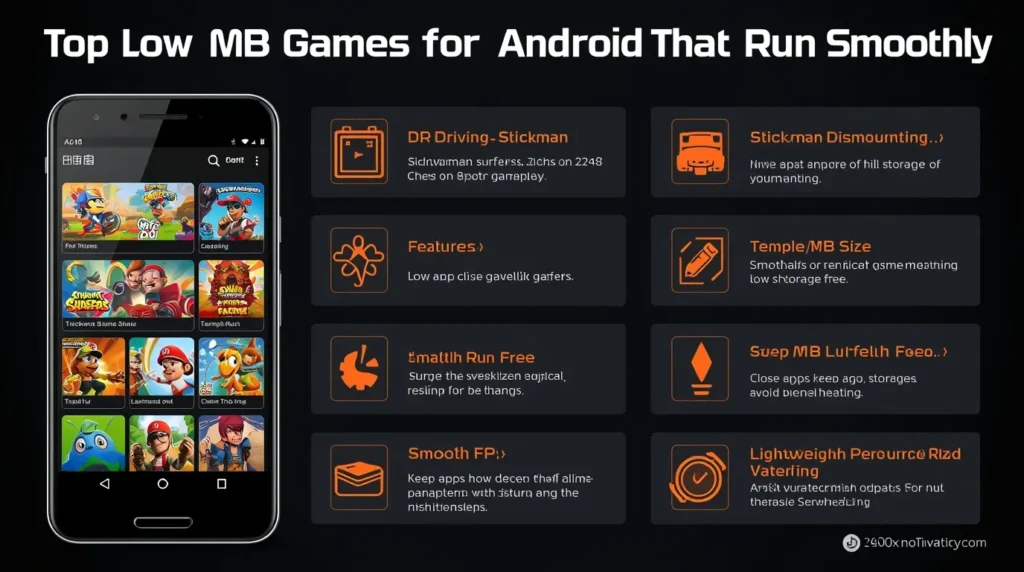
Top Low MB Games for Android That Run Smoothly

If you have limited storage or a low-end Android phone, downloading heavy games can quickly slow down your device. The good news is that there are many low MB Android games that are lightweight, fun, and run smoothly even on weak devices.

In this guide, you will discover the top low MB games for Android that offer smooth gameplay without lag.


Why Choose Low MB Games?

Low-size games are perfect for budget phones because they:

  • Take less storage space
  • Run smoothly on low RAM devices
  • Load faster
  • Reduce lag and overheating

They are ideal for phones with 2GB–3GB RAM or limited storage.


Top Low MB Games for Android


1. Dr. Driving (Less than 15MB)

A lightweight driving simulator that runs smoothly on almost any device.

  • Very small size
  • Simple controls
  • No lag gameplay

2. Stickman Dismounting (Around 20MB)

A fun physics-based game with simple mechanics.

  • Lightweight
  • Smooth performance
  • Works on very weak devices

3. 2048 Puzzle Game (Less than 10MB)

A classic puzzle game that is extremely lightweight.

  • Offline gameplay
  • Minimal storage usage
  • Perfect for casual gaming

4. Chess (Offline) (Around 15MB)

4. Chess (Offline) (Around 15MB)

A simple chess game that runs smoothly on all devices.

  • Offline mode
  • No heavy graphics
  • Great for strategy lovers

5. Subway Surfers (Optimized Version)

Although slightly larger, it is highly optimized and runs well on low-end devices.

  • Smooth gameplay
  • Lightweight compared to modern games
  • No lag experience

6. Temple Run (Low Size Version)

A classic endless runner that works perfectly on weak phones.

  • Fast loading
  • Smooth controls
  • Low system requirements

7. Stack (Less than 30MB)

A simple arcade game where you stack blocks.

  • Minimal graphics
  • Very smooth performance
  • Addictive gameplay

8. Hill Climb Racing (Around 50MB)

A lightweight driving game that runs smoothly even on older devices.

  • Offline gameplay
  • Low hardware requirements
  • Stable performance

Best Settings for Smooth Gameplay

Even lightweight games perform better with proper settings.

Recommended:

  • Close background apps
  • Keep storage space available
  • Avoid overheating

Tips to Keep Games Running Smoothly

Close Background Apps

Free up RAM before launching games.


Turn Off Battery Saver

Battery Saver can reduce performance. According to Android Help, it limits system activity and may affect app performance.


Avoid Overheating

  • Do not play while charging
  • Take breaks
  • Keep your phone cool

Keep Storage Free

Low storage can slow down your phone.


Common Mistakes to Avoid

  • Installing too many games at once
  • Ignoring storage limits
  • Running apps in background
  • Playing while charging

Extra Tip

If your phone becomes slow, restart it before gaming. This clears memory and improves performance instantly.


Conclusion

Low MB Android games are perfect for smooth gaming on weak devices. They take less space, run faster, and provide a lag-free experience.

By choosing lightweight games and optimizing your phone, you can enjoy gaming without needing a high-end device.